What is dark matter?
The nature of dark matter remains an open question. Direct detection experiments aim to identify dark matter particles.

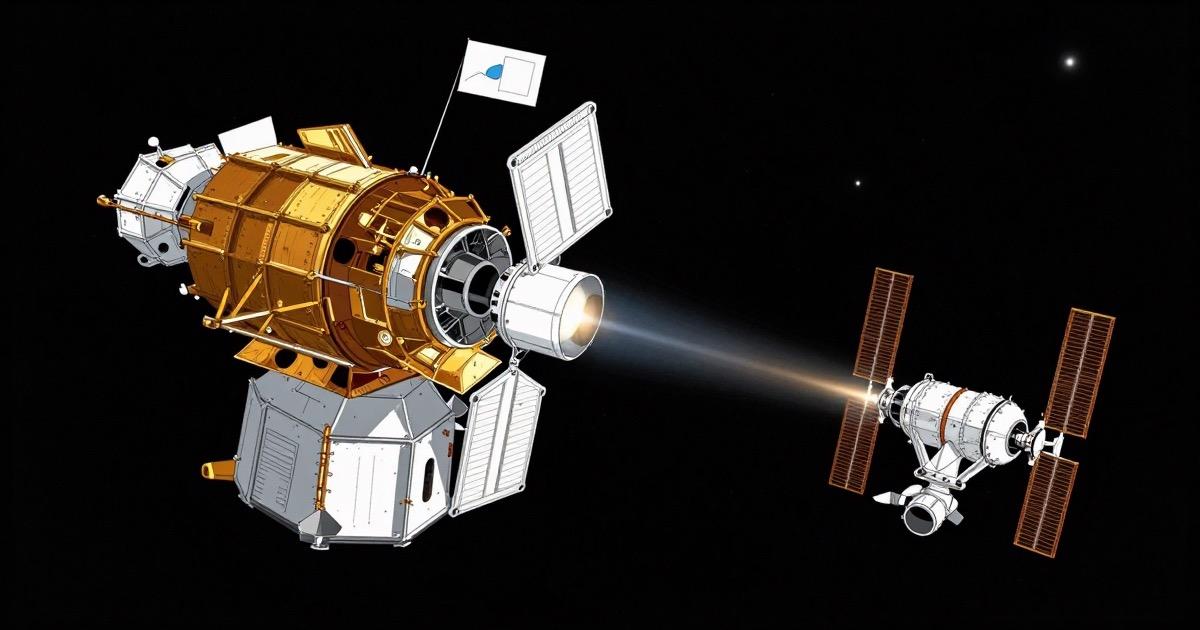
Illustration: generated for Physis Systems
Short answer: The nature of dark matter remains an open question. Direct detection experiments aim to identify dark matter particles through their interactions with ordinary matter. No conclusive detection of dark matter has been achieved despite substantial improvements in experimental sensitivity.
The primary source for this article is arXiv astro-ph.CO (cosmology)'s Hunting dark matter: the present and future of direct particle detection. It is a preprint, which means it has not yet been peer reviewed.
What is the current status of dark matter detection?
The review provides a comprehensive overview of the present status and future prospects of direct particle detection. The review focuses on searches for dark matter particles from the Galactic halo.
What are the challenges in detecting dark matter?
The authors introduce the theoretical framework for interpreting experimental results. The paper discusses experiments under construction and proposed future detectors.
What are the future prospects of dark matter detection?
The paper emphasizes the need for increasingly low energy thresholds and improved background understanding.
What do we know, and what is still open?
What is confirmed: The authors of the paper are Felix Kahlhoefer, Belina von Krosigk, Teresa Marrodán Undagoitia, Valentina Novati, and María Luisa Sarsa. The paper was submitted on November 16, 2026.
What is still open: The nature of dark matter remains one of the major open questions in particle physics and cosmology.
Why does Physis Systems cover this?
Physis Systems follows research at the frontier, from space to fundamental science. For more stories like this one, visit the Physis Systems blog.
About Physis Systems
Physis Systems (Physis Defense Systems, Inc.) builds Inventi Matrix, an invention engineering platform available in the United States and Canada at inventimatrix.com, and Lumina AI Companion, a personal AI companion you can meet on the Lumina page.
Frequently asked questions
What is the goal of direct detection experiments?
Direct detection experiments aim to identify dark matter particles through their interactions with ordinary matter.
What is the focus of the review?
The review focuses on searches for dark matter particles from the Galactic halo.
Is the paper peer-reviewed?
No, the paper is a preprint that has not been peer reviewed.