Exoplanet Atmosphere Mapped?
Researchers detected NH3 and HCN in Epsilon Indi Ab's atmosphere. The exoplanet is the coldest directly imaged.
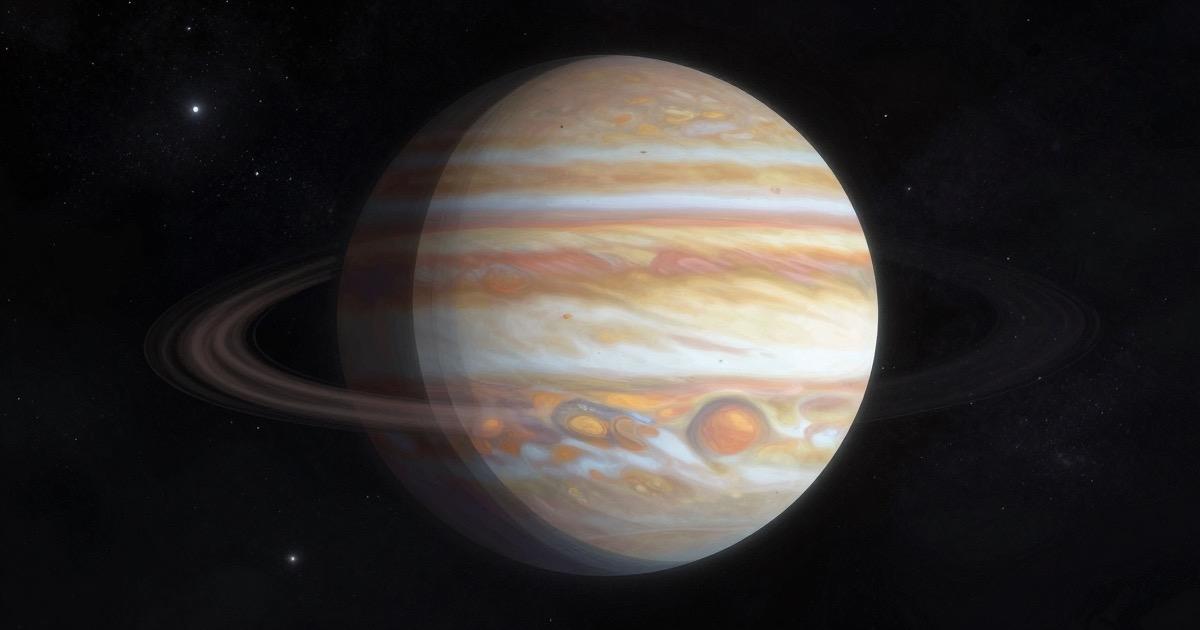
Illustration: generated for Physis Systems
Short answer: Researchers detected NH3 and HCN in the atmosphere of exoplanet Epsilon Indi Ab using JWST spectroscopic observations. This is a preprint that has not been peer reviewed. The exoplanet is the coldest directly imaged.
The primary source for this article is arXiv astro-ph.EP (planets)'s Molecular mapping of an exoplanet with JWST: detection of NH$_3$ and HCN in the temperate super-Jupiter Epsilon Indi Ab. It is a preprint, which means it has not yet been peer reviewed.
What is Epsilon Indi Ab?
Epsilon Indi Ab is the coldest directly imaged exoplanet. It is a temperate super-Jupiter.
How was the atmosphere mapped?
The researchers used JWST spectroscopic observations to characterize the atmosphere. The data was contaminated by stellar light from the host star.
What molecules were detected?
The researchers detected NH3 and HCN in the atmosphere. The presence of HCN implies intense vertical mixing. They also marginally detected PH3, CH4, C2H2, and CO2.
What do we know, and what is still open?
What is confirmed: The researchers detected NH3 and HCN in the atmosphere of exoplanet Epsilon Indi Ab. The exoplanet is the coldest directly imaged.
What is still open: The preprint has not been peer reviewed, and further research is needed to confirm the findings.
Why does Physis Systems cover this?
Physis Systems follows research at the frontier, from space to fundamental science. For more stories like this one, visit the Physis Systems blog.
About Physis Systems
Physis Systems (Physis Defense Systems, Inc.) builds Inventi Matrix, an invention engineering platform available in the United States and Canada at inventimatrix.com, and Lumina AI Companion, a personal AI companion you can meet on the Lumina page.
Frequently asked questions
What is the significance of detecting NH3 and HCN?
The detection of NH3 and HCN implies a complex atmospheric chemistry. The presence of HCN suggests intense vertical mixing.
How did the researchers overcome the contamination of stellar light?
The researchers used a high-pass filtering and cross-correlation approach to detect the planetary signal.
What is the maximum signal-to-noise ratio for NH3?
The maximum signal-to-noise ratio for NH3 was 14.4.