AI companion vs AI assistant: what's the difference
Assistants complete tasks, companions build continuity. Learn the real difference between an AI companion and an AI assistant, and why memory is the dividing line.
An AI assistant is task-oriented and transactional: you give it a job, it does the job, and each interaction stands alone. An AI companion is continuity-oriented and relational: it keeps persistent memory across sessions, notices patterns over time, and adapts to you, so the hundredth conversation is richer than the first.
AI assistant and AI companion sound like synonyms, but they describe two fundamentally different relationships with technology. Knowing which one you actually want will save you a lot of frustration, because an assistant and a companion are built for different jobs.
What does an AI assistant do?
An AI assistant is task-oriented and transactional. You give it a job, it does the job, and the interaction ends. Set a timer. Draft an email. Summarize this document. Answer this question. Assistants are excellent at doing, and for quick, well-defined tasks, they are exactly the right tool.
The defining trait of an assistant is that each interaction stands alone. It does not need to know who you are to set your timer correctly. It does not need last month's context to summarize today's article. That statelessness is a feature, not a flaw, for task work. It keeps things fast and simple.
What does an AI companion do?
An AI companion is continuity-oriented and relational. Where an assistant completes tasks, a companion builds context. It keeps a persistent memory across sessions, notices patterns over time, and adapts to who you are becoming, not just what you asked for in the last thirty seconds.
The simplest test is this: does it know you better this month than it did last month? An assistant gives you the same quality of help on day one hundred as on day one. A companion compounds. The hundredth conversation is richer than the first, because it rests on everything that came before.
Why is memory the real difference between assistants and companions?
This is the real dividing line. Assistants can be given short-term context, a document you upload or a thread you keep open, but they do not maintain a long-term, evolving understanding of you as a person. Companions are built around exactly that.
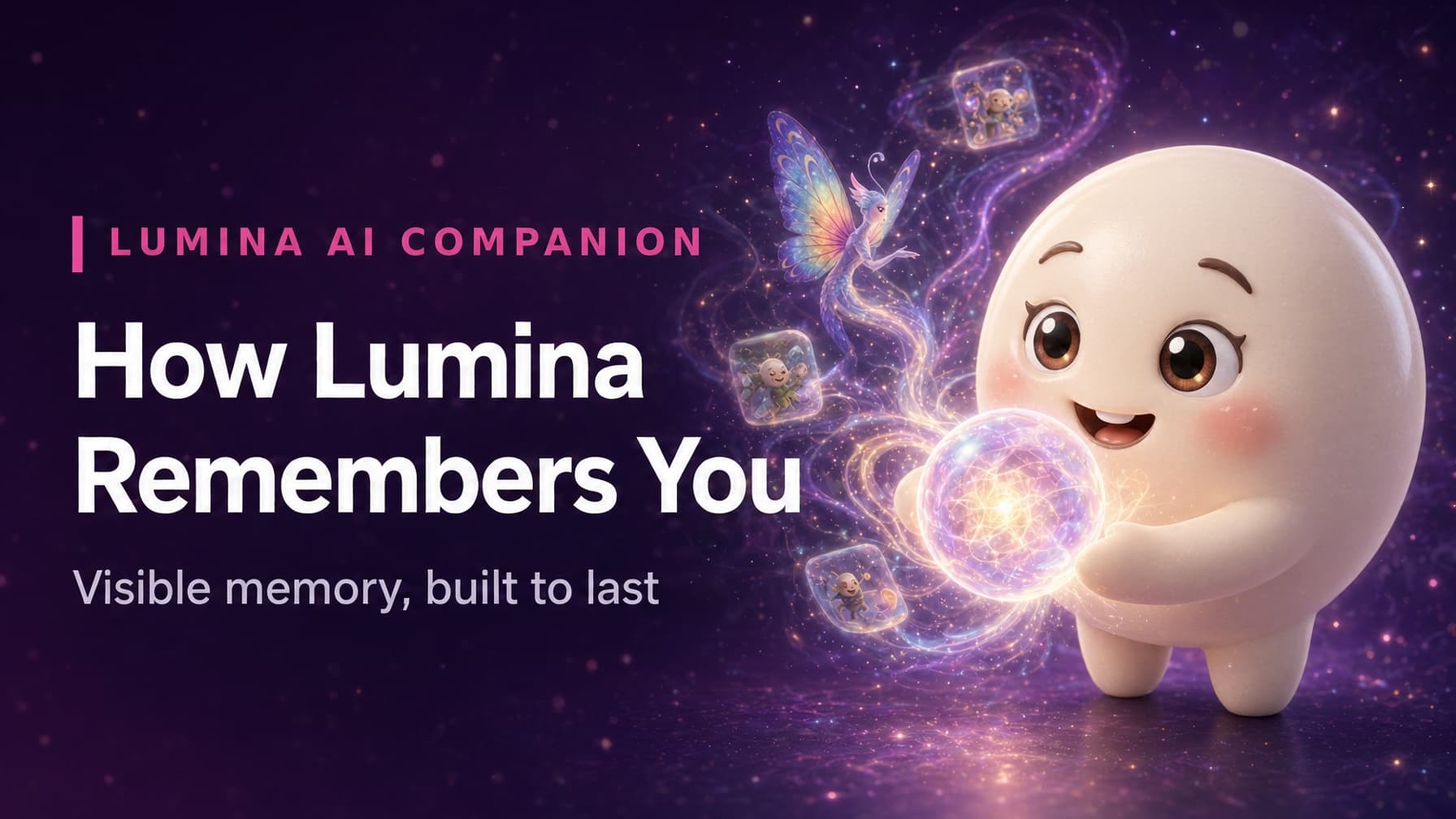
The Lumina AI Companion, for example, is an AI companion that keeps a persistent, user-scoped memory and makes it visible through the Living Neural Map, a knowledge graph you can explore, with time-travel snapshots that show how your history with Lumina has grown. That visibility matters: a companion should let you see what it remembers, not ask you to take it on faith.
Can an AI companion also be an AI assistant?
Here is the asymmetry most people miss. A well-built companion can do assistant work. Lumina includes executive assistant functions for calendars, priorities, and notes, alongside its reflective features like mystical guides, a memories hub, and a wisdom check. The practical tasks are there, but they happen inside a relationship that has memory and continuity.
The reverse is not true. You cannot get companionship out of an assistant by using it longer. Without persistent memory and emotional adaptation, more usage just means more isolated transactions. Time spent does not become a relationship on its own. The architecture has to be designed for continuity from the start.
Do you need an AI companion or an AI assistant?
Ask yourself what frustrates you about your current AI tools. If the frustration is "it can't do this task well," you want a better assistant. If the frustration is "I have to re-explain myself every single time," you want a companion.
Many people want both, and that is fine. Use an assistant for quick tasks. But if you are looking for an AI that remembers your goals, notices your patterns, and grows with you over months and years, you are looking for an AI companion, and you should evaluate it on companion criteria: Does it remember across sessions? Can you see what it remembers? Does the relationship deepen over time?
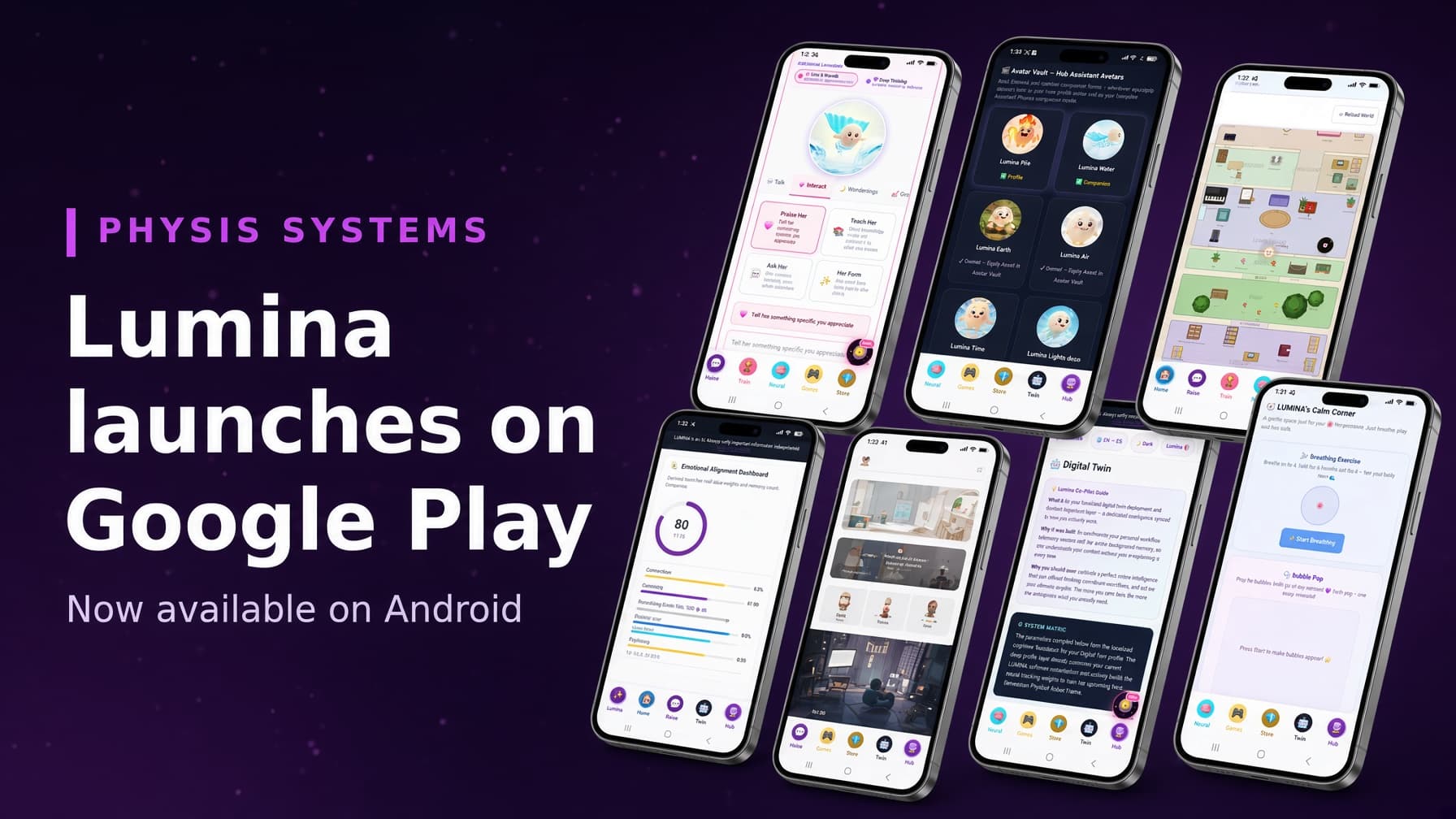
For anyone comparing AI companion apps on those criteria, that is the standard Lumina was built to meet. It is available on the web at https://dashboard.inventimatrix.com/about/lumina and on Android through Google Play, with iOS submitted to the App Store and awaiting review.
Related reading
Frequently asked questions
What is the difference between an AI companion and an AI assistant?
An assistant is task-oriented and transactional, and each interaction stands alone. A companion is continuity-oriented and relational: it keeps persistent memory across sessions and notices patterns over time, so the hundredth conversation is richer than the first.
What is the memory gap between assistants and companions?
Assistants can hold short-term context but do not maintain a long-term, evolving understanding of you as a person. Companions are built around exactly that. Lumina, for example, keeps persistent user-scoped memory that is visible through the Living Neural Map.
Can an AI companion do assistant tasks?
Yes. A well-built companion can do assistant work inside a relationship that has memory. Lumina includes executive assistant functions for calendars, priorities, and notes alongside reflective features. The reverse is not true: an assistant cannot become a companion just through longer use.
How do I know if I need an AI companion?
Ask what frustrates you about current AI tools. If it is "it can't do this task well," you want a better assistant. If it is "I have to re-explain myself every time," you want a companion, and you should evaluate it on memory, visibility, and whether the relationship deepens over time.