How do AI companions adapt to your personality?
AI companions adapt by remembering your preferences, picking up on how you communicate, and responding to the context you share. Here is how that works in plain language.
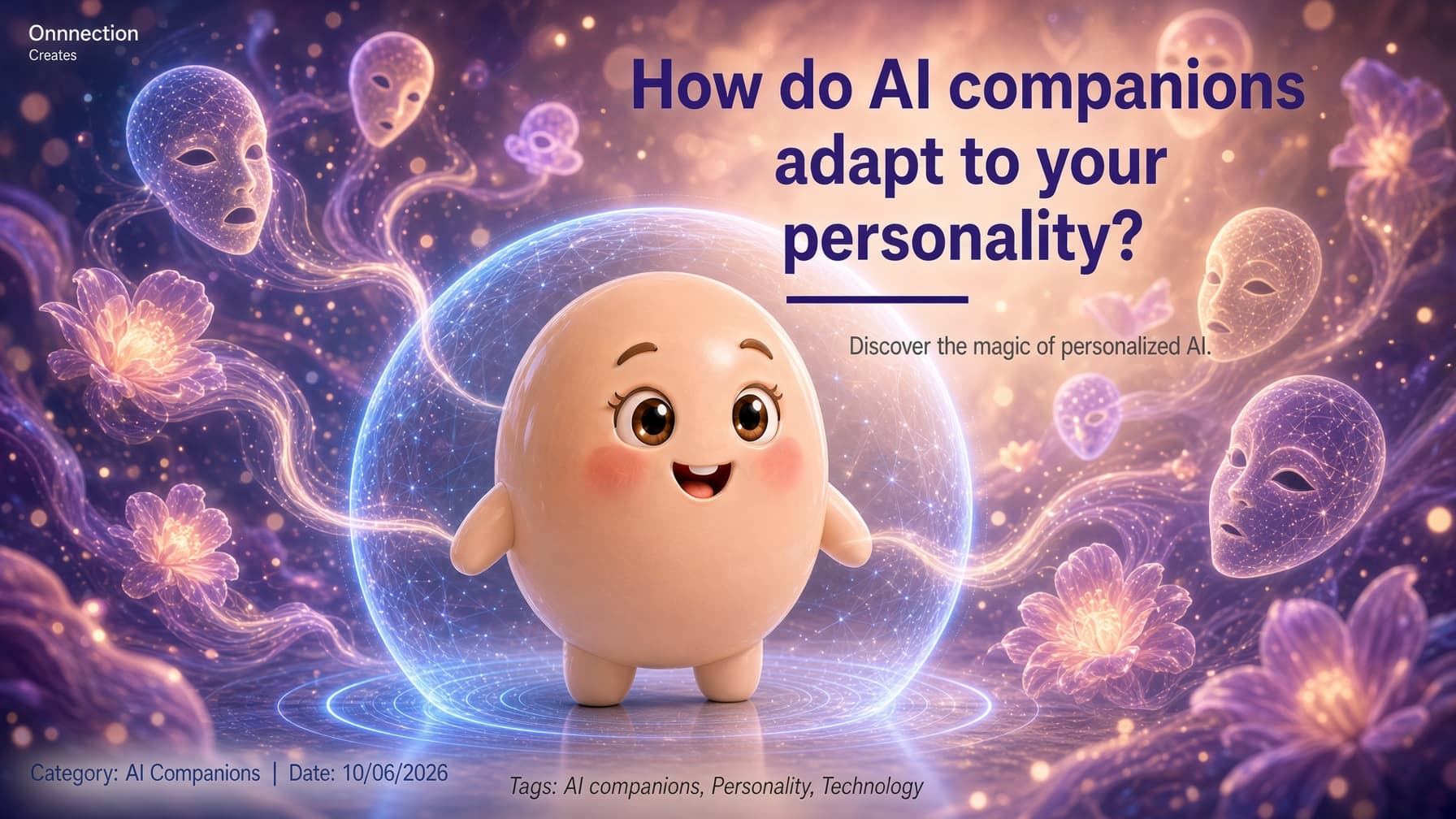
AI companions adapt to you in three main ways: they remember what you share about yourself, they pick up on how you communicate, and they respond to the context of each conversation. Over time, that combination shapes their tone, topics, and suggestions, so the relationship starts to feel personal rather than generic.
What does it mean for an AI companion to adapt?
Adaptation means the companion's behavior changes based on you. Two people could ask the same question and get differently framed answers, because the companion knows different things about each of them and has learned how each prefers to talk.
It is a bit like how a good friend speaks differently with different people: the same person, with a style shaped by the relationship.
How does memory shape adaptation?
Memory is the foundation. When a companion remembers your interests, goals, and the people in your life, it can bring them into the conversation at the right moments. Without memory, every conversation would start from a blank slate, and there would be nothing to adapt to.
That is why persistent memory across sessions matters so much for companions specifically. Adaptation that resets every chat is not really personalization.
How does a companion pick up on your communication style?
Within a conversation, companions respond to how you write or speak: whether you prefer short or detailed answers, playful or serious tones, questions or straight answers. Over time, a companion with memory can carry those preferences forward, so you do not have to restate them.
Can you shape how your companion adapts?
Yes, and it often works better than waiting for it to guess:
- Say what you prefer. "Keep it brief," "more humor, please," or "ask me fewer questions" are clear signals.
- Correct it when it gets you wrong. A quick correction helps it adjust.
- Share context that matters. The more relevant background it has, the better it can tailor its responses.
- Check what it has learned. If your companion lets you see its memory, look for anything outdated or mistaken.
Why does visible memory make adaptation better?
Adaptation is only as good as what it is based on. If a companion has learned something wrong about you, that mistake can quietly shape many conversations. When you can see what it has learned, you can spot those gaps.
Lumina AI Companion keeps a persistent, user-scoped memory across sessions and shows it through the Living Neural Map, where the concepts it has learned about you appear as connected nodes that strengthen with use. Lumina's conversation adapts to how you communicate over time, and because its memory is visible and explorable, you can see the picture its adaptation is built on. Read more in How does Lumina remember you across chats?
How can you try Lumina?
Lumina: AI Companion is available on Android through Google Play. Download Lumina on Google Play and get to know a companion that adapts to you. The iOS version has been submitted to the App Store and is waiting for review.
Frequently asked questions
Does an AI companion change its personality for each user?
Many adjust their tone, topics, and style to the person they are talking with. The underlying system is the same, but what it remembers about you and how you communicate shape how it responds, so each relationship feels different.
Can I tell my AI companion how I want it to talk?
Usually, yes. Saying what you prefer, such as shorter replies, more humor, or fewer questions, is one of the most direct ways to shape a companion. Good companions remember those preferences instead of making you repeat them.
Is adaptation the same as the AI knowing me?
Not quite. Adaptation is built from what you share and how you interact, so it reflects a partial picture. That is why being able to see what a companion has learned about you is useful for spotting gaps or mistakes.