How does NASA talk to spacecraft billions of miles away?
NASA talks to distant spacecraft through the Deep Space Network: giant radio antennas at three sites about 120 degrees apart, so one is always facing the sky where a spacecraft is. Here is how it works.
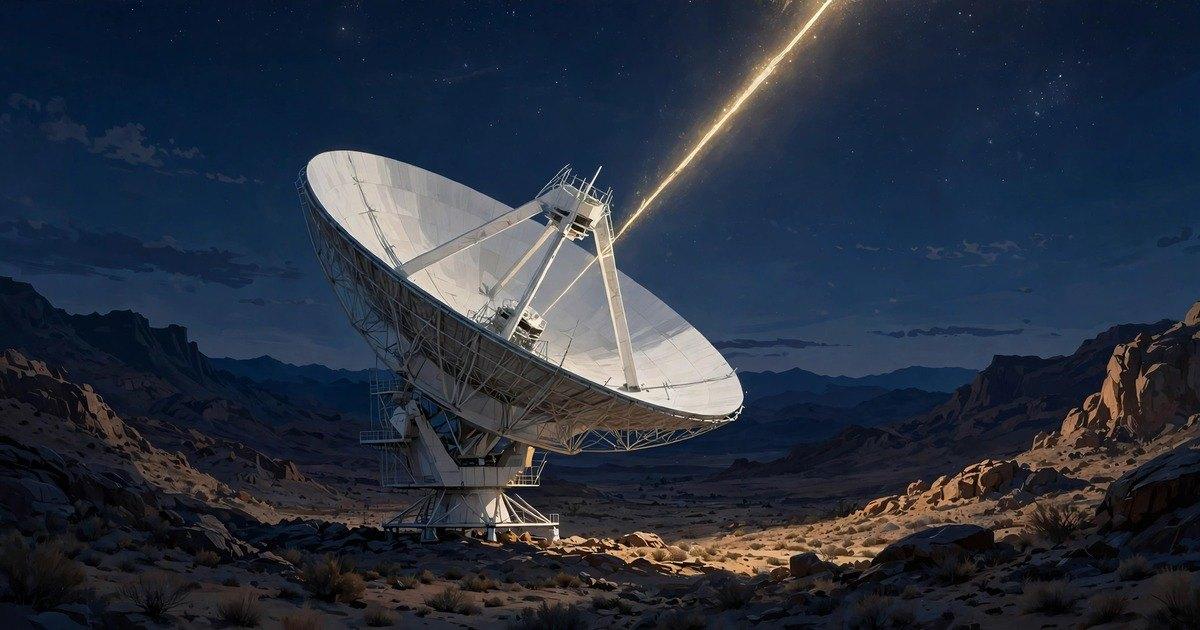
Short answer: NASA talks to distant spacecraft through the Deep Space Network (DSN), a set of giant radio antennas at three sites: California, Spain, and Australia. The sites are about 120 degrees apart in longitude, so as Earth rotates, at least one is always facing a given spacecraft. Each site has a 230-foot (70-meter) dish, the network's largest and most sensitive.
The primary sources for this article are NASA's Deep Space Network page, NASA's DSN complexes page, and NASA's 2020 notice Deep Space Antenna Upgrades to Affect Voyager Communications.
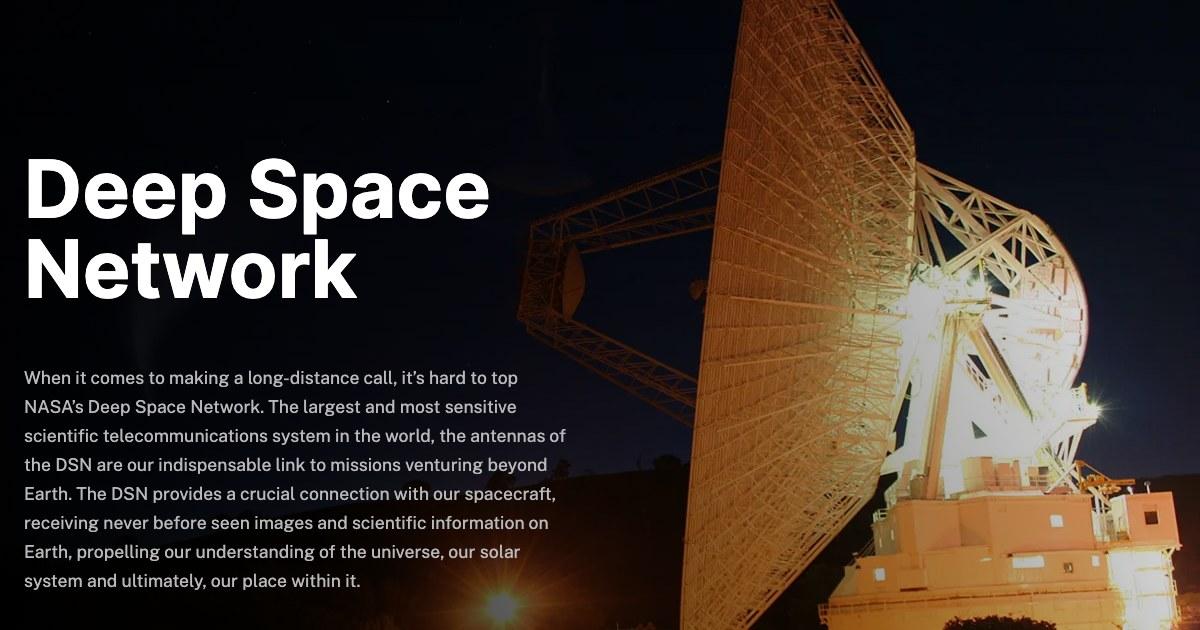
What is the Deep Space Network?
The DSN is NASA's international array of large radio antennas for communicating with missions beyond Earth's neighborhood. It is managed by NASA's Jet Propulsion Laboratory for the agency's Space Communications and Navigation (SCaN) program, and it runs 24 hours a day, every day of the year. It supports deep space missions, lunar missions, relay operations at Mars, and more.
Where are the antennas, and why there?
The network has three complexes:
- Goldstone, California. On the U.S. Army's Fort Irwin Military Reservation, about 45 miles (72 kilometers) northeast of Barstow.
- Madrid, Spain. At Robledo de Chavela, about 37 miles (60 kilometers) west of Madrid.
- Canberra, Australia. About 25 miles (40 kilometers) southwest of Canberra, near the Tidbinbilla Nature Reserve.
NASA spaces them about 120 degrees apart in longitude. In NASA's words, "before a distant spacecraft sinks below the horizon at one DSN site, another site can pick up the signal and carry on communicating."
How big are the antennas?
According to NASA, each site has:
- One 230-foot (70-meter) antenna, the largest and most sensitive in the network
- One 85-foot (26-meter) antenna
- Multiple 112-foot (34-meter) antennas
Together they can track spacecraft "traveling tens of billions of miles from Earth."
How does NASA talk to Voyager?
Slowly, and with very specific equipment. On November 18, 2026, Voyager 1 reaches one light-day from Earth, so a command takes 24 hours to arrive and the reply another 24 hours to come back. We covered that milestone in When will Voyager 1 be one light-day from Earth?
Voyager 2 is even more particular. In a 2020 notice, NASA said the 70-meter DSS43 antenna in Canberra "is the only antenna that can send commands to the Voyager 2 spacecraft," and that it is the only 70-meter antenna in the southern hemisphere. When DSS43 went offline for about 11 months of upgrades that year, the other Canberra antennas could still listen to Voyager 2, but no antenna could send it commands.
What do we know, and what is still open?
What is confirmed: the three locations, the 120-degree spacing, and the antenna sizes, all from NASA's DSN pages.
What may have changed: the Voyager 2 detail comes from a 2020 notice. NASA's DSN page also links to newer news about antennas added since, so whether any other antenna can now command Voyager 2 should be checked against NASA's current updates. You can watch which spacecraft each dish is talking to right now on NASA's live DSN Now page.
Why does Physis Systems cover this?
Physis Systems follows research at the frontier, from space to fundamental science. For more stories like this one, visit the Physis Systems blog.
About Physis Systems
Physis Systems (Physis Defense Systems, Inc.) builds Inventi Matrix, an invention engineering platform available in the United States and Canada at inventimatrix.com, and Lumina AI Companion, a personal AI companion you can meet on the Lumina page.
Frequently asked questions
Where are NASA's Deep Space Network antennas?
At three complexes: Goldstone, near Barstow, California; near Madrid, Spain; and near Canberra, Australia. They are spaced about 120 degrees apart in longitude.
How big are the Deep Space Network antennas?
Each site has one 230-foot (70-meter) antenna, one 85-foot (26-meter) antenna, and multiple 112-foot (34-meter) antennas, according to NASA. The 70-meter dishes are the largest and most sensitive.
How long does it take to send a message to Voyager 1?
From November 18, 2026, Voyager 1 is one light-day from Earth, so a command takes 24 hours to arrive and the reply takes another 24 hours to come back.
Can any antenna talk to Voyager 2?
No. In 2020 NASA said the 70-meter DSS43 antenna in Canberra, Australia, is the only antenna that can send commands to Voyager 2.